
Nintendo Switch 2 System Review: A Mature Evolution of Nintendo’s Hybrid Console
This review of the Nintendo Switch 2 System examines Nintendo’s second‑generation hybrid console from a technical and user‑experience perspective. Key points include its upgraded processing power and expanded storage, improved display and form factor, performance in handheld and docked modes, game library compatibility, online and local multiplayer experience, and overall build quality. The article concludes with clear pros and cons to help potential buyers decide if the Switch 2 is a worthwhile upgrade from the original Switch or an ideal first Nintendo system.
Introduction
The Nintendo Switch 2 System builds on the hybrid home/handheld concept that made the original Switch so successful. Rather than reinventing the platform, Nintendo focuses on refining core hardware, improving everyday usability, and supporting a growing library of new and backward‑compatible games. This review looks at the Switch 2 from a practical, technical, and user‑experience standpoint to help you decide if it fits your needs as a primary or secondary gaming system.
Product overview and key features
At a high level, the Nintendo Switch 2 System is a dedicated gaming console that can be used both as a portable device and as a living‑room system when docked to a TV. The hardware and ecosystem are designed for quick pick‑up‑and‑play sessions, local multiplayer, and a strong catalog of Nintendo‑exclusive titles.
Design and build
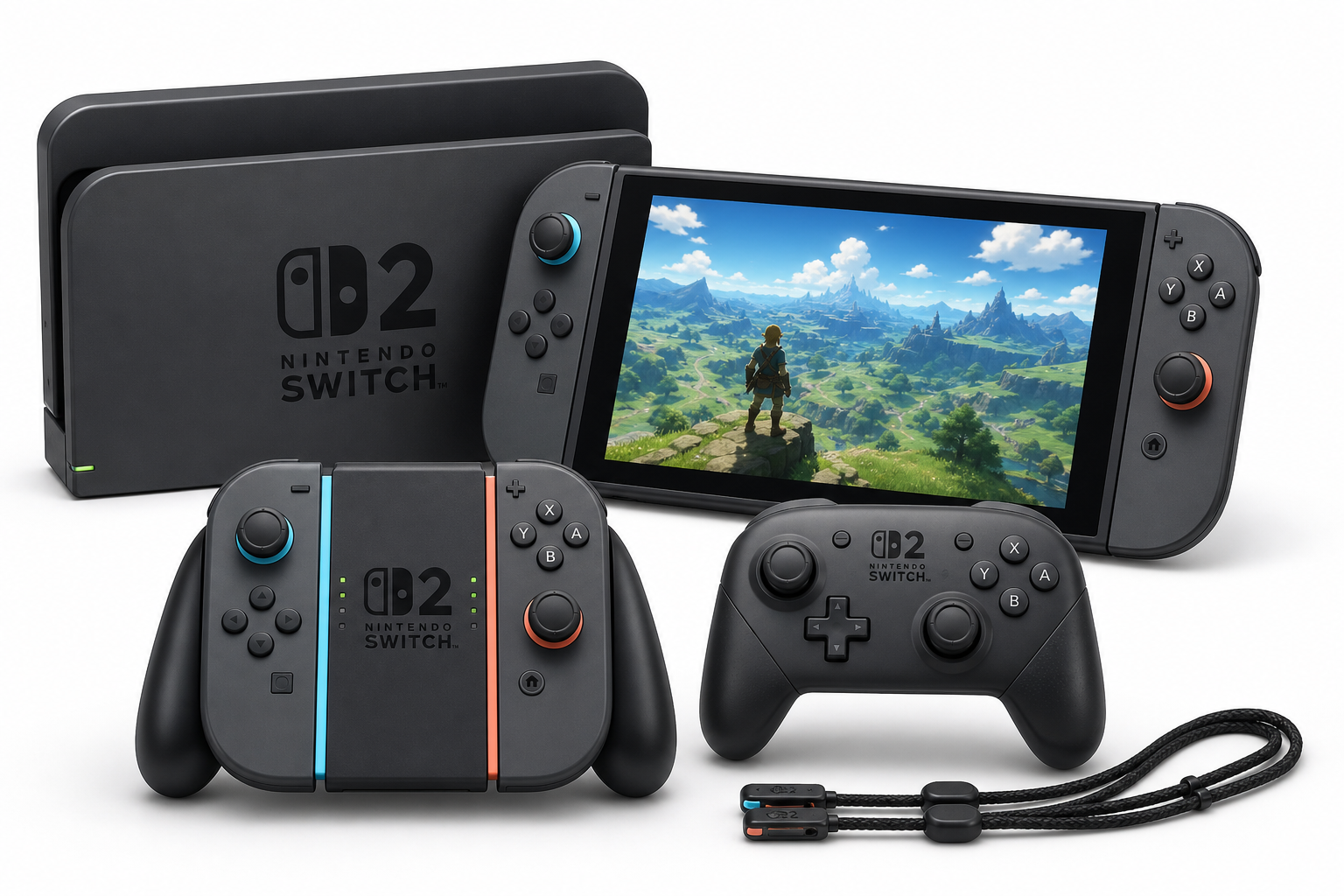
- Hybrid form factor: Like its predecessor, the Switch 2 slides into a dock for big‑screen play and functions as a handheld when removed. The transition between modes is near‑instant and feels seamless.
- Refined ergonomics: The chassis has a more mature, streamlined look than the original Switch, with better weight distribution that reduces hand fatigue during long handheld sessions.
- Detachable controllers: The side controllers can detach for two‑player local gaming or for use with accessories. Button layout will feel familiar to existing Switch owners but has been fine‑tuned for improved comfort and responsiveness.
- Enhanced display: The handheld screen offers improved brightness and color reproduction over first‑generation models, making games look richer and easier to view in varied lighting.
Hardware and specifications (high‑level)
Nintendo does not emphasize raw specifications the way PC or traditional home console platforms do, but several generational improvements are apparent:
- Updated system‑on‑chip (SoC) for faster load times, smoother frame rates in supported games, and more stable performance in visually demanding titles.
- Increased internal storage (with microSD expansion) to better accommodate large digital titles and frequent software updates.
- Improved wireless connectivity for more reliable online play and downloads.
- Optimized power management, allowing the system to balance performance and battery life depending on workload and screen brightness.
Software ecosystem
- Backwards compatibility with prior Switch titles (subject to publisher support), giving new owners access to an extensive library immediately.
- New and upgraded games that can take advantage of improved hardware, with higher resolutions, more stable performance, or additional visual effects in both handheld and docked modes.
- Integration with Nintendo’s online services, including cloud saves for supported software and access to retro game catalogs via subscription tiers.
Performance and user experience
Everyday performance
In handheld mode, the Nintendo Switch 2 System focuses on consistent frame rates and responsive controls rather than chasing ultra‑high resolutions. Load times are reduced compared with the original Switch and early Switch Lite hardware, and complex scenes tend to hold their frame rate more reliably.
Docked to a TV, supported games can take advantage of the higher power envelope to push sharper image quality or improved stability. While it does not compete with high‑end PCs or top‑tier home consoles in pure horsepower, the system delivers smooth, well‑tuned performance in the kinds of games Nintendo platforms are known for: platformers, adventure titles, party games, and stylized action.
Display and audio
- The improved screen makes handheld play more immersive, especially in colorful titles and games with fine details such as text‑rich RPGs.
- Viewing angles remain strong, important for co‑op play where multiple people might be looking at the screen from different positions.
- Onboard speakers are serviceable for casual play, but headphones or external audio (through the TV when docked, or via wireless/headset options) offer a noticeably better experience, particularly in cinematic or music‑driven games.
Controls and comfort
The detachable controllers retain motion control, HD rumble‑style haptics, and multiple input methods, making them suitable for both traditional and motion‑based titles. Improvements in build quality help reduce drift issues and enhance long‑term reliability. The system also supports a range of controller accessories, including more traditional gamepads that are ideal for longer docked sessions.
Battery life and thermals
Nintendo’s power‑efficient hardware and software tuning translate into practical battery life for portable use. Longevity depends heavily on brightness and game complexity, but the Switch 2 is designed to comfortably handle commuting, travel, or couch gaming away from the dock without frequent recharging. The cooling system keeps fan noise modest; under typical loads the console runs warm but not uncomfortably hot in handheld mode.
Online and local multiplayer
- Local wireless and split‑screen: Switch 2 continues Nintendo’s emphasis on in‑person multiplayer with support for multiple systems in the same room, as well as shared‑screen modes when docked.
- Online matchmaking via Nintendo’s subscription services remains straightforward for mainstream titles. Latency is dependent on your home network, but the improved wireless hardware helps maintain stable connections in typical household environments.
Pros and cons
Pros
- Mature hybrid design that works well both as a handheld and as a living‑room console.
- Improved processing power and storage for better performance and more comfortable digital game ownership.
- Brighter, more vibrant display that significantly benefits handheld play.
- Strong first‑party and exclusive game library, with backward compatibility extending the catalog.
- Flexible control options, including detachable controllers and support for more traditional gamepads.
- Reasonable battery life and quiet operation in most scenarios.
Cons
- Still not targeting high‑end, 4K‑first performance; technically minded players may find raw power behind leading home consoles.
- Online service remains less feature‑rich than some competing ecosystems, particularly in voice chat and social integration.
- Detachable controllers and moving parts introduce more potential wear compared to a single‑body handheld design.
- Storage, while improved, can still fill quickly for players who favor large digital titles and frequent downloads, making a microSD card highly recommended.
Conclusion and recommendation
The Nintendo Switch 2 System is best understood as a refinement of a proven hybrid concept rather than a dramatic reinvention. Its upgraded internals, better display, and improved ergonomics address many of the practical limitations of earlier models while preserving what made the original system stand out: flexibility, accessibility, and a strong lineup of Nintendo‑exclusive games.
For new buyers looking for a versatile console that can move smoothly between handheld and TV play, the Switch 2 is an easy recommendation. For existing Switch owners, the decision is more nuanced: if you primarily play in handheld mode, value smoother performance and a better screen, or are ready to upgrade aging hardware, the improvements are significant enough to justify serious consideration. If you are fully satisfied with a late‑generation original Switch or Switch OLED used mostly in docked mode, the upgrade is appealing but not absolutely essential.
Overall, the Nintendo Switch 2 System offers a well‑rounded, user‑friendly experience that should age gracefully, making it a solid centerpiece for both casual and dedicated Nintendo fans.