
Valve Steam Deck OLED 512GB (International Version) Review: Premium PC Gaming in Your Hands
The Valve Steam Deck OLED 512GB (International Version) is a powerful handheld gaming PC that combines a 7.4-inch HDR OLED display, 16GB of LPDDR5 RAM, and a 512GB NVMe SSD with Valve’s SteamOS 3.0. It’s aimed at PC gamers who want their Steam library on the go without giving up access to desktop features. This review covers real-world performance, battery life, ergonomics, and where the international model differs in practice, along with its main strengths, trade-offs, and potential alternatives.
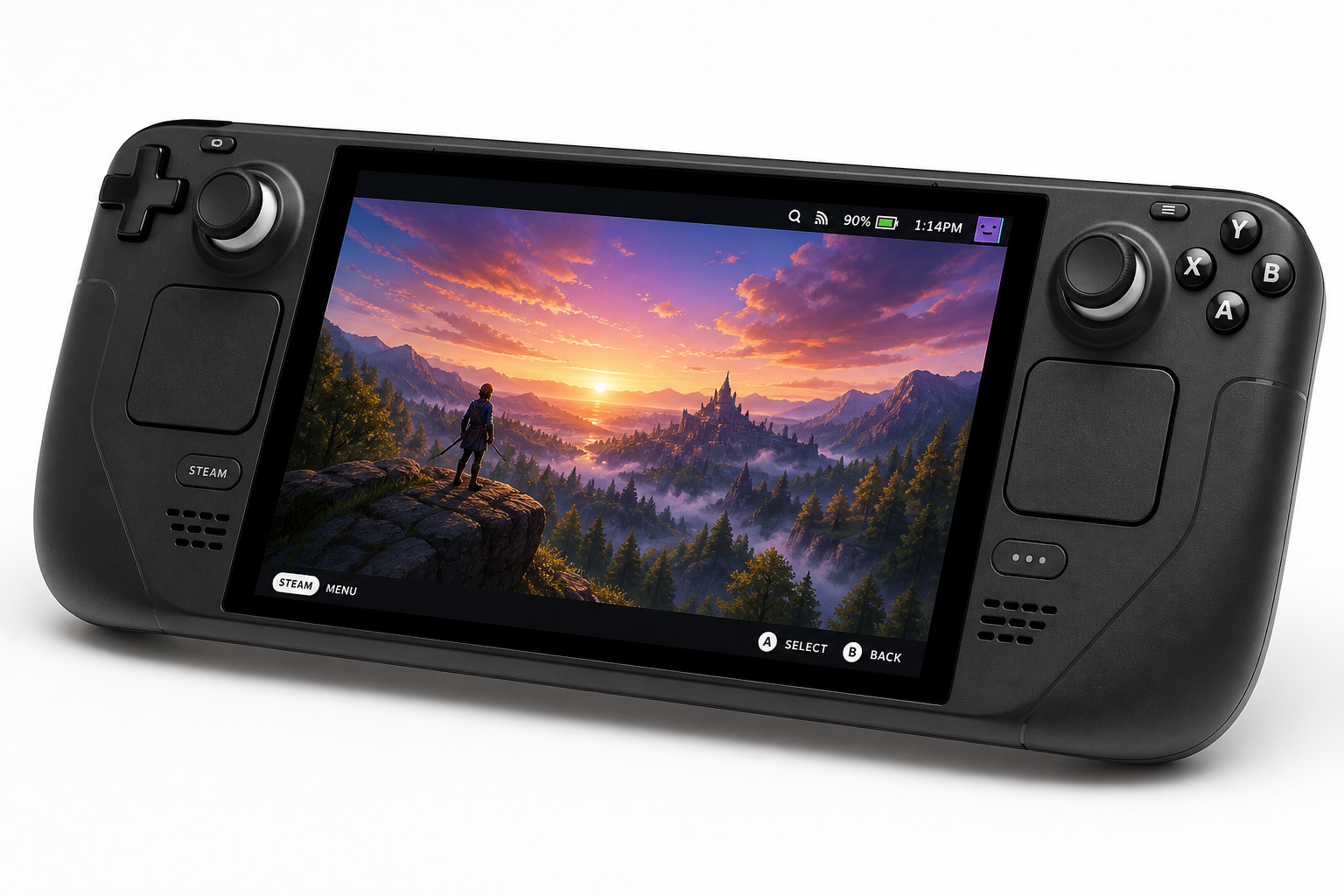
Product Summary
The VALVE Steam Deck OLED 512GB SSD + 16GB RAM (International Version) is a handheld gaming console built around PC hardware and Valve’s SteamOS 3.0. It features a 7.4-inch HDR OLED display at 1280 × 800 resolution with up to 90Hz refresh, driven by a 6 nm AMD APU (Zen 2 CPU with RDNA 2 graphics) and 16GB LPDDR5 RAM.
Storage comes in the form of a 512GB NVMe SSD, with the option to expand via microSD. Wireless connectivity includes Wi‑Fi 6E and Bluetooth 5.3, and the USB‑C port supports DisplayPort 1.4 output and USB 3.2 Gen 2, enabling connection to monitors, docks, keyboards, and other peripherals.
As an international version, this model is typically imported rather than sold directly by Valve in some regions, but the core hardware and SteamOS experience are consistent with official Steam Deck OLED units.
From a value standpoint, the Steam Deck OLED 512GB is positioned as a mid–high tier handheld PC. Depending on your region and seller, it often sits around $878.00, placing it above many cloud-focused handhelds but below or comparable to some higher‑powered Windows gaming handheld PCs.
Target Users
The Steam Deck OLED 512GB is best suited for:
- PC gamers with existing Steam libraries who want portable access to their games without migrating to a new ecosystem.
- Players who prioritize display quality—especially those sensitive to motion blur, contrast, and color accuracy.
- Enthusiasts and tinkerers who appreciate a Linux-based system they can customize, tweak, or even dual‑boot.
- Commuters and frequent travelers who want a single device that can function as both a handheld console and, when docked, a lightweight desktop.
- Indie and AA game fans for whom the performance envelope of the AMD APU is more than sufficient at 800p.
It is less ideal for:
- Players focused solely on the latest AAA titles at ultra settings; the Deck is designed around 800p gaming with tuned presets, not high‑end 1440p/4K performance.
- Users who want a fully plug‑and‑play console experience with zero tweaking, especially if they’re unfamiliar with PC‑style settings, Proton compatibility layers, or Linux.
- Budget‑constrained buyers who don’t need the OLED panel or 512GB internal storage and might prefer a cheaper used LCD model or another entry-level handheld.
Main Benefits
1. OLED Display With 90Hz Refresh
The standout feature is the 7.4‑inch HDR OLED panel. Compared to the original LCD Steam Deck, the OLED model delivers:
- Perfect blacks and significantly higher contrast, enhancing dark scenes in games.
- Vivid color reproduction that makes stylized and indie titles look particularly good.
- Up to 90Hz refresh rate for smoother scrolling and gameplay in supported titles.
Combined with the 1280 × 800 resolution, it hits a sweet spot for sharpness at handheld distance without overly stressing the GPU.
2. Mature SteamOS Ecosystem
The Deck runs SteamOS 3.0, a Linux-based OS with:
- Direct integration with Steam: library access, cloud saves, achievements, and controller‑friendly Big Picture UI.
- Proton compatibility to run many Windows titles with minimal to no user intervention.
- A built-in performance overlay and per‑game profiles for frame rate caps, TDP limits, and scaling options.
Valve continues to iterate on SteamOS, improving game compatibility, performance, and quality‑of‑life features.
3. Capable Hardware for 800p Gaming
The custom AMD APU (Zen 2 CPU + RDNA 2 GPU) and 16GB LPDDR5 RAM are tuned for efficient 800p gaming. In practice, this means:
- Most indie and older AAA titles can hit 40–60 fps at medium‑high settings.
- Newer AAA games often run well at 30–45 fps with tweaked settings and FSR upscaling.
- The 16GB RAM helps with modern titles and multitasking in Desktop Mode.
Combined with the 512GB NVMe SSD, load times are generally snappy, and you can keep a moderate library of larger titles installed before needing a microSD card.
4. Improved Battery Life vs. LCD Model
The 50Wh battery works in tandem with the more efficient 6 nm APU and OLED panel to deliver improved battery life over the older LCD Deck in many scenarios. Depending on game complexity and settings, realistic usage spans roughly 3–12 hours, with lighter indie titles and 40 fps caps extending endurance.
5. Flexible Form Factor
The Deck blurs the line between console and PC:
- In handheld mode, the integrated controls (thumbsticks, trackpads, ABXY, triggers, and back buttons) support both traditional gamepad input and finer cursor‑like control.
- In docked or Desktop Mode, you can connect a monitor, keyboard, and mouse via USB‑C or a compatible dock, turning it into a compact Linux PC suitable for browsing, office tasks, or light creative work.
Key Considerations
Before choosing this specific 512GB international version, keep the following in mind:
-
Regional Warranty & Support
As an international model, warranty coverage and after‑sales support can vary by seller and country. Make sure you understand:- Who provides warranty service (Valve, retailer, or third‑party importer).
- How returns and repairs are handled in your region.
-
Power Adapter and Plug Type
Some international units ship with a plug type that may not match your local sockets. You might need a travel adapter or, in some cases, a replacement charger that meets the Deck’s USB‑C PD requirements. -
Storage Needs
While 512GB is a practical baseline for modern games, large AAA titles (sometimes 80–150GB each) will still fill it quickly. Plan on:- Using a high‑speed microSD card for additional storage.
- Managing your installed library more actively if you play many big releases.
-
Linux & Proton Compatibility
SteamOS supports a large and growing library, but not every Windows game will run perfectly without tweaks. Anti‑cheat systems or certain launchers can create friction. If you rely heavily on a small set of specific games, it’s worth verifying their Steam Deck compatibility. -
Performance vs. More Powerful Windows Handhelds
Competing devices (from brands like ASUS, Lenovo, and others) use newer x86 architectures and dedicated Windows environments, often delivering higher raw performance but with trade‑offs in price, battery life, thermals, or ergonomics. The Deck leans toward balanced performance and usability rather than chasing maximum fps. -
Price Fluctuations and Availability
Because this is an international version sold through third‑party channels, pricing can fluctuate significantly. While Valve’s own MSRP has shifted over time, marketplace pricing may be above or below that baseline, so it’s worth tracking deals and ensuring that what you pay (around $878.00 at the time of writing) reflects the current market.
Pros
- Excellent 7.4" HDR OLED display with perfect blacks, rich colors, and up to 90Hz refresh for smooth visuals.
- Balanced performance for 800p gaming, handling indie, retro, and many modern AAA titles comfortably with tuned settings.
- 16GB of LPDDR5 RAM provides headroom for current and near‑term titles, multitasking, and future SteamOS updates.
- 512GB NVMe SSD offers a practical amount of internal storage, with microSD expansion for larger libraries.
- Mature SteamOS 3.0 experience tailored for handheld use, including a controller‑friendly interface and robust performance tools.
- Strong ergonomics: comfortable grips, analog sticks, trackpads, and back buttons suited to extended sessions.
- Versatile connectivity via USB‑C (DisplayPort, USB 3.2 Gen 2), Wi‑Fi 6E, and Bluetooth 5.3.
- Desktop Mode effectively turns the Deck into a small Linux PC for productivity and general computing.
Cons
- Price volatility on international listings: the international version can be significantly pricier than buying directly from Valve in supported regions.
- Warranty and support may be less straightforward compared to locally sourced units.
- Limited to 800p resolution on the built‑in display, which is appropriate for performance but may disappoint users expecting 1080p or higher.
- Battery life still drops quickly with demanding AAA titles at higher frame rates or brightness.
- Linux and Proton compatibility layer can introduce occasional quirks, especially with games using certain anti‑cheat solutions or launchers.
- Fan noise is noticeable under sustained heavy load, though generally improved versus some early LCD Deck behavior.
- Internal SSD upgrades are possible but not officially user‑serviceable, and they require technical comfort and risk.
Alternatives
While this review focuses strictly on the VALVE Steam Deck OLED 512GB SSD + 16GB RAM (International Version), it’s useful to understand the types of alternatives buyers often compare it against:
-
Other Steam Deck OLED capacities (e.g., 1TB)
Same platform and OS with more internal storage and, in some cases, extra perks like anti‑glare glass. These may offer better long‑term convenience at a higher price. -
Windows-based handheld gaming PCs
Devices from other manufacturers often ship with Windows, offering broader native compatibility for non‑Steam launchers and certain anti‑cheat‑dependent titles, but may involve more power management complexity, higher prices, and shorter battery life. -
Cloud-focused handhelds
Systems designed primarily around game streaming can be less expensive, but they depend heavily on fast, stable internet and typically lack the offline performance and flexibility of the Deck’s local hardware.
When comparing, buyers usually weigh ecosystem (SteamOS vs Windows), performance, price, battery life, and ergonomics rather than raw specs alone.
Conclusion
The VALVE Steam Deck OLED 512GB SSD + 16GB RAM (International Version) is a compelling handheld PC for players who want their Steam library in a portable form without sacrificing too much of the desktop experience. Its OLED display, balanced performance, and mature SteamOS software make it a standout option in the handheld market.
However, as an international version, you should account for regional pricing, warranty terms, and power adapter compatibility before buying. If the local availability and cost (around $878.00 depending on your market and seller) make sense for you, this 512GB OLED Deck strikes an excellent balance between capability, portability, and display quality.
For PC gamers ready to embrace a handheld first, PC second workflow—without abandoning their existing Steam ecosystem—the Steam Deck OLED 512GB remains one of the most well-rounded options currently available.