
ASUS ROG Zephyrus G16 vs. Lenovo Legion Pro 7i: Which Gaming Laptop Is Better?
Choosing a high-performance gaming laptop often means balancing gaming performance, display quality, portability, battery life, cooling, and price. The ASUS ROG Zephyrus G16 and Lenovo Legion Pro 7i are two strong options for gamers who want desktop-level performance in a laptop. However, they are designed with different priorities in mind. The Zephyrus G16 focuses on a slimmer, more portable design and premium display experience, while the Legion Pro 7i places greater emphasis on sustained performance and gaming power. This comparison looks at their major differences to help gamers decide which laptop better fits their needs.
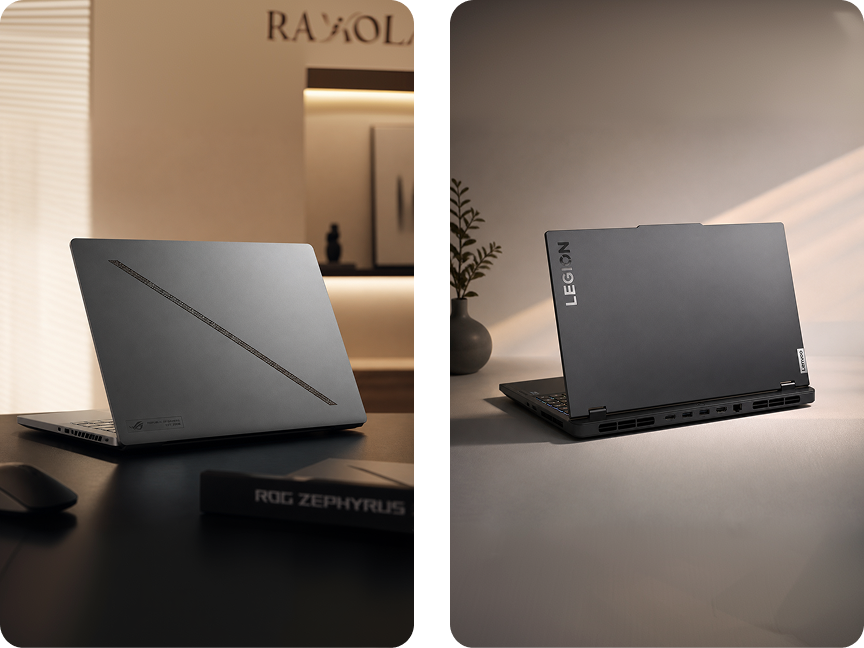
1. Overview
Gaming laptops have become much more powerful in recent years. For many users, a modern gaming laptop can replace both a desktop computer and a traditional laptop.
The ASUS ROG Zephyrus G16 and Lenovo Legion Pro 7i are good examples of two different approaches to gaming laptops.
The Zephyrus G16 is designed to balance performance, portability, and premium design.
The Legion Pro 7i is more focused on maximum gaming performance, cooling, and sustained workloads.
Neither approach is automatically better. The right choice depends on how and where you plan to use your laptop.
2. Gaming Performance
Performance is one of the biggest reasons to choose a gaming laptop over a standard notebook.
Both the Zephyrus G16 and Legion Pro 7i can be configured with powerful processors and dedicated NVIDIA GeForce RTX graphics, making them suitable for demanding modern games.
For games played at 1440p or higher resolutions, the GPU will have a major influence on frame rates. CPU performance also becomes important for competitive games and applications that depend heavily on processor power.
The Legion Pro 7i generally has an advantage when the priority is sustained high performance. Its larger chassis provides more room for cooling hardware and allows it to focus heavily on performance.
The Zephyrus G16 can still deliver excellent gaming performance while placing more emphasis on keeping the system relatively thin and portable.
Advantage: Lenovo Legion Pro 7i for maximum sustained gaming performance.
3. Display Quality
The display is another area where the two laptops can differ significantly.
The ROG Zephyrus G16 is known for offering premium display options, including high-resolution and high-refresh-rate panels on certain configurations.
This makes it appealing not only for gaming but also for watching movies, editing photos, creating content, and everyday use.
The Legion Pro 7i also offers high-refresh-rate displays designed specifically for gaming, with strong brightness, resolution, and color performance depending on the configuration.
If you want a laptop that feels equally comfortable for gaming and creative work, the Zephyrus G16 has a particularly attractive design philosophy.
Advantage: ASUS ROG Zephyrus G16 for a premium all-around display experience.
4. Portability
This is one of the clearest differences between the two laptops.
The Zephyrus G16 is designed to be relatively slim and portable for a high-performance gaming machine.
That makes it easier to carry between home, school, work, or travel.
The Legion Pro 7i takes a more traditional high-performance gaming laptop approach. Its larger chassis gives it more room for powerful hardware and cooling, but it also makes the laptop less convenient to carry around.
If your laptop spends most of its time on a desk, the additional size may not matter much.
If you regularly travel with your gaming laptop, however, portability can become a major factor.
Winner for portability: ASUS ROG Zephyrus G16
5. Cooling and Thermal Performance
Gaming laptops need effective cooling because high-performance CPUs and GPUs can generate significant heat.
The Legion Pro 7i's larger chassis gives it an advantage when it comes to cooling capacity. This can be particularly useful during long gaming sessions or demanding workloads.
The Zephyrus G16 has a more difficult challenge because it tries to deliver strong performance in a slimmer chassis.
ASUS has developed sophisticated cooling solutions for the ROG lineup, but the physical size difference still matters.
For users who regularly play demanding games for several hours at a time, sustained cooling performance should be an important consideration.
Winner for sustained thermal performance: Lenovo Legion Pro 7i
6. Keyboard and Everyday Experience
A gaming laptop should also work well for everyday tasks.
The Zephyrus G16 has a relatively clean and premium design that doesn't look excessively aggressive. This makes it easier to use in an office, classroom, or professional environment.
The Legion Pro 7i has a more traditional gaming-oriented appearance and is designed primarily around performance.
Both provide keyboards suitable for gaming and productivity, but personal preference can make a big difference.
If you want a laptop that can easily transition between gaming and professional use, the Zephyrus G16 may have the more versatile personality.
7. Battery Life
Battery life is one area where gaming laptops generally have limitations compared with lightweight productivity laptops.
High-performance processors, dedicated graphics, high-refresh-rate displays, and powerful cooling systems all consume significant energy.
The Zephyrus G16's slimmer design and emphasis on portability make battery efficiency particularly important to its overall appeal.
The Legion Pro 7i is more focused on performance and is often better thought of as a portable desktop replacement than an all-day battery-powered notebook.
For serious gaming, you'll still want to stay near a power outlet with either laptop.
Winner for mobility: ASUS ROG Zephyrus G16
8. Upgradeability and Storage
Gaming laptops benefit from having upgradeable memory and storage because games and applications continue to become larger.
Depending on the exact configuration, users should check whether RAM is soldered or replaceable and how many storage slots are available.
The Legion Pro 7i's larger chassis can provide more flexibility for storage and internal components.
The Zephyrus G16 is more compact, so buyers should pay closer attention to the exact configuration before purchasing.
Tip: If you're planning to keep the laptop for several years, consider buying enough RAM and SSD storage from the beginning.
9. Design and Build Quality
The Zephyrus G16 stands out with its minimalist approach.
Instead of looking like a traditional gaming machine, it has a sleek design that can blend into professional and everyday environments.
The Legion Pro 7i has a more performance-focused appearance. Its design makes it clear that the machine is built primarily for gaming.
This comes down largely to personal preference.
Choose the Zephyrus G16 if you want a sleek, understated laptop.
Choose the Legion Pro 7i if you prefer a more performance-oriented gaming design.
10. Price and Value
Price can vary significantly depending on the CPU, GPU, display, RAM, and storage configuration.
The Zephyrus G16 often commands a premium because of its combination of performance, portability, build quality, and display technology.
The Legion Pro 7i can offer strong value for gamers who care primarily about gaming performance and don't mind carrying a larger machine.
When comparing prices, make sure you're comparing similar hardware configurations.
A laptop with a better GPU or display may cost more but provide significantly more value for your particular needs.
Key point: Don't compare the laptop price without comparing the specifications.
11. Which One Should You Buy?
Choose ASUS ROG Zephyrus G16 if you:
- Want a relatively thin and portable gaming laptop
- Prefer a premium display
- Need a laptop for both gaming and everyday work
- Care about design and build quality
- Travel frequently with your laptop
- Want a more understated appearance
Choose Lenovo Legion Pro 7i if you:
- Prioritize maximum gaming performance
- Want strong sustained performance
- Prefer a larger gaming laptop
- Care about cooling performance
- Want a powerful desktop replacement
- Don't mind sacrificing some portability for performance
Final Verdict
The ASUS ROG Zephyrus G16 and Lenovo Legion Pro 7i are both excellent choices, but they are aimed at slightly different users.
The ROG Zephyrus G16 is the better choice for gamers who want a combination of performance, portability, premium display quality, and everyday usability. It makes sense for someone who needs one laptop for gaming, school, work, travel, and entertainment.
The Lenovo Legion Pro 7i is better suited to gamers who put performance, cooling, and sustained gaming power ahead of portability. Its larger design makes it closer to a desktop replacement that you can move when necessary.
Ultimately, the decision comes down to one simple question:
Do you want a gaming laptop that's easier to carry, or one that's designed to push performance as far as possible?
If portability and versatility matter more, the Zephyrus G16 is the more attractive option. If raw gaming performance is your top priority, the Legion Pro 7i is the stronger choice.